Event
  • 23.03.2021

Teacher unions and (education) crises: Effectiveness of social dialogue in Francophone Africa

Join us for a panel discussion on Teacher unions and (education) crises: Effectiveness of social dialogue in Francophone Africa at CIES Conference 2021. The discussion will be held in Zoom Room 128.

Please register here. The event is open to CIES members only. 

The discussion will be held in English and French with live transcript and automatic closed caption in English. 

*

This panel will explore various forms of social dialogue and the involvement of teachers’ unions in the development of education policies in Francophone African countries. By drawing lessons from different cases, this panel aims to problematise social dialogue while identifying issues on teacher participation in different countries and its relation to the different political economies. Additionally, the variety of cases may bring a sub-regional perspective of the context and aims to invite researches to deepen into this little-explored topic.

The different viewpoints and experiences include three complementary presentations. First, insights from an on-going research carried out by the International Task Force on Teachers for Education 2030 that will shed light on social dialogue in the context of the COVID-19 pandemic. Second, the FORSYNC project highlights practical approaches to foster unions technical capacities in six countries in sub-Saharan Africa. Third, a critical empirical case study from the Democratic Republic of Congo brings nuance to both lessons learned and innovative approaches by discussing the reality in a challenging policy context.


General presentation of the Panel

Rarely have education systems been subjected to such upheavals. The COVID pandemic has shutdown schools for many months, exams have been postponed, and many children, especially girls, will not be returning to school. The pandemic will most likely have long-term negative consequences for educational achievements and children’s well-being.

Teachers have acted as true leaders (UNESCO, 2020). From one moment to another, their work routine was interrupted, yet they were tasked with upholding education systems . and ensuring learning continuity. Where technologically possible, this happened in the form of distance education. Yet many teachers were also involved by helping to contribute to self-learning materials, radio programs and returning to school under very difficult circumstances to finalize the school year.

Under these conditions, dialogue between education authorities, teachers and parents is crucial in developing a consensual response in health and education to the pandemic and its impact.

Unions are the representative bodies for teachers that ought to advocate and fight for teachers’ rights. However, they are not always included in policy-making processes. The COVID pandemic offers a possibility to analyze to what extent teachers' unions are involved in the development of education policies in this particular crisis context? This panel will explore this question, focusing on various forms of social dialogue in Francophone African countries.

Education sector monitoring processes have been formalized since the inception of the Global Partnership for Education (GPE) in 2002, but the degrees of effective involvement of teachers' unions vary (Global Partnership for Education, 2017). For example, teacher unions are usually not sufficiently involved in joint sector reviews. The Civil Society Fund for Education (CSEF) facilitated an increased and more regular participation of Civil Society Organizations (CSOs), in sectoral dialogue mechanisms (Universalia, 2018).

The UNESCO and Education International project “Improving support for teachers and their participation in local education groups” has enabled teacher unions to participate more effectively in social dialogue with some national governments. More recently, civil society actors, trade unionists and experts are also organized into a network to develop a teachers’ union training project (FORSNYC).

What is social dialogue?

As defined by the International Labor Organization (ILO), social dialogue includes all types of negotiation, consultation or simply exchange of information between representatives of governments, employers and workers, in various ways, on questions relating to policy, economic and social issues of common interest. In particular, the ILO (2020) stipulates that social dialogue aims to encourage the formulation of a consensus between the main actors of the world of work as well as their democratic participation. In education, effective social dialogue can meaningfully improve the education policy process and increase the effectiveness of education and the quality of education.

Magagi (2020) makes several points that are relevant for a discussion of teacher unions’ role in policy-making in Francophone Africa during and after COVID. First, unions have been strongly linked to the political/decolonization struggle. Second, in the wake of democratization in the 1990s, unions have been created and functioned in the shadow of political parties. Third, as a result, the number of unions has proliferated. In taking the example of Niger, Magagi argues that unions in Niger would need to distance themselves clearly from political parties to regain independence.

Indeed, many unions were created only to serve as a bridgehead for political parties to the labor movement. Personal interests and the disproportionate political ambitions of union leaders in political parties have done a lot of damage and created several divisions in the ranks of African trade unions. Offering one possible solution, several national trade union centers have succeeded in redefining the objective boundaries between trade unionism and political parties (BIT 2010).

Social dialogue during the pandemic 

Regarding the management of the pandemic, social dialogue has taken place, but many of the unions have expressed dissatisfaction with its outcomes. At the time of writing this article, little to no information has been collected in relation to this topic, except Education International undertook a survey of unions in 34 African countries. Indeed, despite 71% of unions having been consulted according to the COVID-19 and education survey (Education International Research, 2020), only 9% say their views have been fully taken into account. For 51%, their opinion was taken into account a few times while 11% said their opinion was ignored. A significant proportion of unions (28%) claim that they have not been consulted at all.

In addition to the dialogue with governments around the management of the pandemic, almost all unions (92%) have sensitized members around the pandemic. A significant portion (38%) invested in the development of tools for their members.

It is clear that in general (62% of cases) no measures have been taken to support teachers according to the Education International survey. Only 13% of governments have recruited more qualified teachers, posing the problem of managing additional classrooms, following the reduction in class sizes for the application of barrier measures. Note that 28% of governments have invested in the training and professional development of their teachers.

Given this background, this panel brings together different viewpoints and experiences to discuss policy and practice with regard to social dialogue between teacher unions, governments and other stakeholders in Francophone African countries.

Three complementary presentations come together to achieve this objective.

  • First, insights from past and on-going research carried out by UNESCO and by the International Task Force on Teachers for Education 2030 will shed light on a variety of experiences and lessons learned.
  • Second, the aforementioned FORSYNC project highlights practical approaches to foster unions technical capacities.
  • Third, a critical empirical case study from the Democratic Republic of Congo brings nuance to both lessons learned and innovative approaches by discussing the reality in a challenging policy context.


The panel will be chaired by Education International, and the international association of teachers’ union.

Event
  • 15.03.2021

Gender-responsive Education Toolkit for Teachers, Teacher Educators, School Managers and Curriculum Developers in Africa

  • Background

Gender biases and stereotypes are continuously impeding girls and women to unleash their full potentials in development processes for the befit of themselves and their community at large. In education, lack of quality and relevant curriculum including gender biased teaching and learning methods, together with absence of safe learning environments are among the critical factors hindering girls from thriving to self-reliance and empowerment through education. In most African countries, these challenges are outstanding requiring concerted efforts by all stakeholders. Though there are recent developments in education systems in terms of improved gender party particularly at primary level through policy actions, there is an un met need by education professionals, including teachers to improve knowledge and skills of gender mainstreaming in day today practices of education provision, with the aim of ensuring continued and sustainable improvements on education outcomes of girls.


In support of national efforts in Africa, the UNESCO International Institute for Capacity Building in Africa (IICBA), has been providing targeted technical support for member states to improve institutional capacities on gender mainstreaming in education and teacher training. Recently, partnering with UNESCO-HNA project, IICBA has developed a publication entitled: Gender-responsive Education Toolkit for Teachers, Teacher Educators, School Managers and Curriculum Developers in Africa, to support efforts by education institutions in the continent.

This webinar introduces the toolkit to participants with presentations on content and main functions of the toolkit, including discussion on how end users are supposed to utilize the toolkit for intend education purposes. The toolkit addresses target SDG 4.5, aiming to eliminate gender disparities in education and ensure equal access to all levels of education and vocational training for the vulnerable. It also supports the implementation of the AU strategy on gender equality and women’s empowerment 2018 -2028, which sets forth a plan to realize Aspiration 6 of the African Union’s Agenda 2063: “An Africa where development is people driven, relying upon the potential offered by people, especially its women and youth and caring for children.”

  • Objectives of the webinar

The main objective of this webinar is to support promotion of gender equality in education systems through the use of gender mainstreaming tools. Specific objectives include:

  1. Introduce the content and usability of the toolkit
  2. Encourage participants to indulge in continuous learning and practices
  3. Get feedback on usability of the toolkit for education purposes in accordance with its intended objectives
  • Expected outcomes

The expected outcomes of the webinar are:

  1. Knowledge and skills on using the toolkit for teaching and learning, curriculum development and teacher training.
  2. Inventories on opportunities and potential challenges in using the toolkit in Africa
  • Target audience

The Webinar is open to all education stakeholders including school leaders, teachers, teacher educators, partners in education, and education authorities at diverse levels in Africa and beyond that are interested and engaged in girls’ education.

Join the webinar here.

  • Webinar program

programme

Photo credit: Doug Linstedt/Unsplash

Blog
  • 03.02.2021

Teachers as Tutors: Evidence from Africa

This blog was written by Mark BrayUNESCO Chair Professor in Comparative Education at the University of Hong Kong, and Director of the Centre for International Research in Supplementary Tutoring (CIRIST) at East China Normal University (ECNU). It reflects the author's opinions, which are not necessarily those of the TTF.


Shadow education and implications for policy

The theme of non-state actors in education, which has huge importance throughout the world, will be the focus for the 2021 edition of UNESCO’s Global Education Monitoring (GEM) Report. A key dimension includes the private supplementary tutoring undertaken by public school teachers. In the literature, private supplementary tutoring is commonly called shadow education. The metaphor is used because as the curriculum changes in schools, so it changes in the shadow; and as the school system expands, so does the shadow.

Shadow education has long been visible in East Asia, and is now a global phenomenon. While shadow education has received much attention in Egypt and some other parts of North Africa, it is neglected in Sub-Saharan Africa. This article draws on a book entitled Shadow Education in Africa (available in English and in French), the genesis of which was a background paper for UNESCO’s GEM Report.


How widespread is shadow education?

Reliable statistics are scarce, and one message of the book is that better data are urgently needed. Nevertheless, the following statistics shed some light on the prevalence of shadow education.

  • In Angola 94% of surveyed students in Grades 11 and 12 (2015) were receiving or had received tutoring at some time.
  • In Burkina Faso, 46% of surveyed upper primary students (2014/15) were receiving tutoring at the time of the study.
  • In Egypt, 91% of Grade 12 respondents (2014) indicated that they were either currently receiving tutoring or, if they had graduated, had done so before completion.

Other sources show trends over time (Table 1), with significant growth that has likely continued. Some of this tutoring is provided by commercial entrepreneurs who operate tutorial centres, and some is provided by university students and others who operate informally. In Africa, most tutoring is provided by in-service teachers taking additional employment as part-time occupations.

Table 1: Enrolment Rates in Private Tutoring, Grade 6, 2007 and 2013 (%)

Table 1

 Source: SACMEQ National Reports. 


What issues arise when teachers are also tutors?

Private supplementary tutoring can be beneficial. It can help slow learners to catch up with their peers, and can strengthen countries’ overall human capital. It also provides extra income for teachers, perhaps helping to retain them in the profession. In many African countries, high proportions of school personnel are contract teachers who commonly have relatively low salaries. Even teachers forming part of the civil service may feel that their salaries are inadequate to meet all family needs.

visual 2

Source: http://gem-report-2017.unesco.org/en/countonme

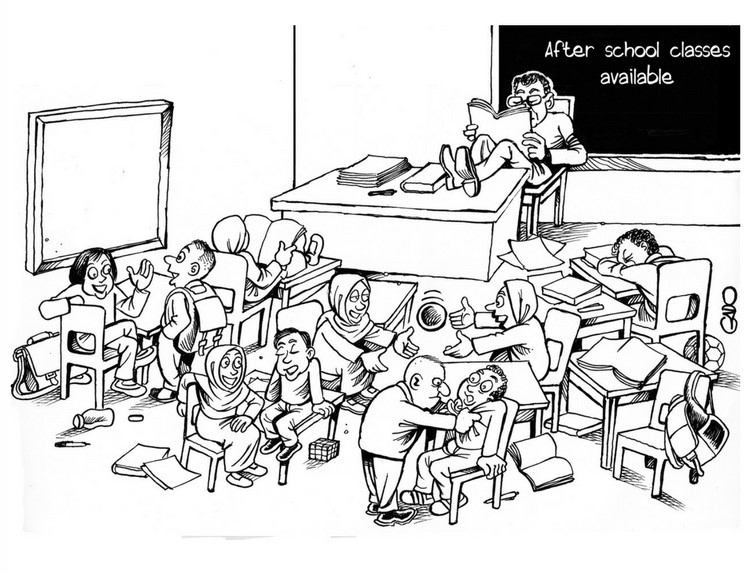
Yet when teachers are also tutors, several problematic issues arise. One is that the teachers may neglect their regular teaching duties in order to devote time and energy to their private lessons. Especially problematic situations arise when teachers tutor the students for whom they are already responsible in mainstream schooling. For example, the danger arises of deliberate reduction of attention during regular lessons in order to promote demand for private tutoring. Dangers also arise of discrimination in the classroom, when teachers openly or covertly favour the students receiving supplementary lessons from them.


What are the policy implications?

The first need is for the topic to be taken out of the shadows – to be discussed not only by Ministry of Education personnel but also by professional bodies at sub-national, school and community levels. Some governments, e.g. in Egypt, Eritrea, The Gambia and Kenya, explicitly prohibit private tutoring by serving teachers. Other governments, for example in Tanzania, Zambia and Zimbabwe, permit such tutoring but prohibit it on school premises. Another category, exemplified by Mozambique, permits private tutoring with official permission but explicitly forbids teachers from tutoring their existing students.

Yet many of these policies exist more on paper than in practice. Governments do not have strong machinery to enforce prohibitions, especially when many actors are sympathetic to the status quo. Thus, even parents may exert pressures on teachers and schools since they want their children to perform well in a competitive environment. Parents frequently feel their children’s teachers know the children best and can therefore provide better support than tutorial centres or other providers.

This situation underlines the need to accompany policies with practical measures to ensure better regulation. Yet sometimes governments feel that the mechanisms to monitor and regulate the practice are inadequate, leading to the development of laissez-faire policies that do little to regulate the problem.


What about the school level?

Even if governments turn a blind eye to the problem, schools can issue their own policies and monitor patterns to avoid ethical malpractice. Schools can help explain the issues to parents, and support finding alternatives to support their children’s needs. School-level policies may be especially effective, since teachers and parents are well known to one another resulting in that guidelines and sanctions are more likely to be meaningful and effective. Nevertheless, it must be recognised that sometimes schools are complicit in encouraging tutoring in order to generate extra revenue for institutional and/or personal uses.


Learning from each other

Some people assume that if the quality of schooling is improved, then shadow education will disappear by itself. Global trends however show the opposite. The East Asian countries that have much shadow education also have strong education systems. Rather, globalisation has increased pressures on families to compete resulting in that shadow education is on the rise in many European and high-income countries. Thus also in Denmark and Finland, which are renowned for the quality of their schooling, the expansion of shadow education is visible. This trend suggests that shadow education is a concern not only in countries where it is already strong but also in those where it is not so strong. In the latter case, policy-makers have the opportunity to shape the sector before it becomes engrained in cultures.. 

visual 3

Further, the fact that large-scale shadow education has been evident for a longer time in  Asia, may bring insights for other parts of the world. One regional study on this theme is  entitled Regulating private tutoring for public good.


Manual / Handbook / Guidelines
  • pdf
  • 08.12.2020

Active Teaching & Learning

The starting point and inspiration for this guide to Active Teaching and Learning is largely adopted from the UNESCO-IICBA modules on ‘Fundamentals of Teacher Education Development’. Instead of...