Blog
  • 18.01.2021

Teachers at the centre of a revitalised education system

In the lead up to International Day for Education, the Teacher Task Force spoke to Michelle Codrington-Rogers, who is a secondary school citizenship teacher in Oxford, and the President of the United Kingdom NASUWT (National Association of Schoolmasters Union of Women Teachers).

In a few days’ time it will be International Day for Education, and the United Nations will be calling to strengthen and revitalize education systems, and recognize teachers as frontline workers. How do you think governments can support teachers in 2021?

Teachers and educators have held together education systems for decades. And with the COVID-19 pandemic, the glue and sticky tape that teachers have been using to hold together education systems has become very evident. Which means that, after the pandemic, we need to be talking about giving teachers back the professional respect they deserve and recognising that we aren't glorified babysitters. Teachers are highly trained, highly qualified professionals. Governments need to help rebuild that trust with the profession. They need to empower us with the ability to make the decisions that impact on the students and young people that we have in front of us, and trust us to use our own professional judgement to provide the best education and life choices that we can for the next generation.


The kind of teacher leadership that you are talking about really became apparent during the pandemic. Can you give us some examples of teacher and school leadership that you saw thriving in 2020?

What was amazing during the pandemic was to see groups of teachers coming together, to pool resources and help each other through creating professional spaces to work together. There are many teachers out there who are thinking of new and innovative ways to engage young people and students. In the UK, the Oak Academy was a great example of this – it was made by teachers, for teachers, who came together and said, let’s share our resources. Another example is a group that formed on social media, allowed teachers from literally all over the world to come together and share ideas - for example how to use Bitmojis in your online learning spaces. What is interesting is that, on a daily basis, we don’t usually have the opportunity to share ideas even with our own colleagues within our school. The pandemic has given us that space again, where we can collaborate and inspire each other.

It also means that we can learn from each other – I honestly believe that the best schools and the best learning environments are where we are all learning from each other. The best teachers, the most inspirational ones, are those who are willing to acknowledge that we’ve always got more to learn.


One of the areas in which you and your colleagues have been showing leadership is your work in decolonising the curricula. Can you tell us about this work and the challenges you have faced?

I am first generation British and my family is originally from the Caribbean. So I grew up knowing my identity and my family’s background and history, but also conscious that my parents and my grandparents were taught British history. This is true for millions of people around the world – that they are being taught a version of history which doesn’t reflect them nor the experiences of peoples who were colonised at some stage of their past.

We've been campaigning in many different guises, with students, in schools, universities and in communities, to decolonise the curricula. The events of 2020 and the Black Lives Matter movement have helped show the importance of re-educating people, especially about how important it is to understand systemic discrimination and prejudice. And it’s not only about history, it’s about teaching how this history has led to where we are today, in the relationships and societies we have today, in a multicultural world and as global citizens. It also means that many teachers have also had to learn about this, as they themselves had been taught a much narrower version of history.

I'm so proud that Education international, during their last global world congress, passed a motion in support of this. Which means that we have teachers and educators from across the world, speaking about what that ‘decolonising’ means in their countries. It means that people from across the world, from Canada, Australia, New Zealand and parts of Africa are becoming visible in their own curricula and in the history being taught in their own countries.

This change has to happen at all levels – among educators and students and communities. In our case, it is very much the fruit of leadership taken by teachers and schools. But we also hope that eventually this will lead to systemic change at the national level, adopted by governments.


Recently you participated in a discussion on the Future of Teachers, organised by UNESCO’s Futures of Education initiative. What do you think will be the main challenges for the teaching profession in the next five years?

The challenges faced by teachers are going to be political, economic and social. From the political point of view, teachers are going to need to be at the heart of conversations – and even struggles – to define what is education about and what it is for. Teachers and teaching are at the centre of those discussions, as there is a tension between traditional and new digital ways of learning. As teachers, we are going to need to be part of helping re-define what this means. We can’t lose sight that teaching is a human interaction built on relationships, and that AI and digital learning can’t replace that.

From an economic point of view, we know that every country’s public purses have been hit by the pandemic. For example, in the UK teachers will not be receiving any pay increase, even after 10 years of austerity. In many countries, teachers are financially way behind where they should be as a profession – and they need to be able to at least pay their bills. So we are faced with a situation where teacher salaries are stagnant, but the stress and workload are increasing. There is a point where teaching as a profession is going to become less and less attractive and there will be less and less people willing to become teachers.

Lastly, teachers are going to be expected to help repair the connections and bonds which have been broken by lockdowns and school closures. Schools aren’t just an academic space; they are also a space in which children and young people are nurtured, and citizens are forged. But to do this teachers and educators are going to need professional respect and trust. What is positive, is seeing how many young people today are politically and socially aware, and conscious of their power and ability to change the world. We have the next generation of social activists who are going to make our world better if not for themselves, then definitely for their children and the next generations. So, I am hopeful - hopeful that education will be a space for us to move the world in that positive direction.

Blog
  • 04.01.2021

How the global school testing culture takes a heavy toll on teachers’ morale

This blog draws substantially from the recent open-access article School Testing Culture and Teacher Satisfaction by William C. Smith & Jessica Holloway, published in Educational Assessment, Evaluation, and Accountability.

In many parts of the world, teachers are held responsible for their students’ test scores. Why does this practice harm teacher morale to such an extent? New research suggests that the answer lies partly in the way test scores are used in teacher appraisals – and points to the dangers of this pervasive practice.

Teachers are subject to increased scrutiny and often the first to be blamed for educational shortcomings. Testing for accountability, where educators are held accountable for student test scores, has spread from the United States and the United Kingdom around the globe. In Portugal and Chile, for example, teachers’ salaries are linked to test scores.

Past research highlights that such practices are harmful to teacher satisfaction. High-stakes, test-based accountability has decreased teacher morale, as well as increased work-related pressure and personal stress. In the United Kingdom, for example, teachers in high-stakes environments have described their disappointment when they realize “the reality of teaching being worse than expected, and the nature (rather than the quantity) of the workload”.

How do such systems lead to teacher dissatisfaction? The way teacher appraisals are used and communicated can help explain the relationship. Teacher appraisals, and the feedback teachers receive from such evaluations, are an important part of that environment and can influence how teachers feel about themselves and their work. Nearly all teachers across 33 countries reported teaching in systems where student tests scores were used in their appraisals as part of a high stakes decision.

The increased use of high-stakes testing to hold teachers accountable reflects what some have called a global testing culture. In a testing culture, student test scores are understood to accurately represent student learning and teachers are expected to do everything in their power to improve test scores for their students and school. Those that fail to fall in line with such a culture can be stigmatized for not being a team player or blamed for not sufficiently preparing students for tests.

Data from 33 countries that participated in the OECD’s 2013 Teaching and Learning International Survey (TALIS) sheds light on the direct and indirect influence of school testing culture on teacher satisfaction.

There is strong evidence that school testing cultures directly damage teacher satisfaction. They can also cause damage indirectly through the appraisals that teachers receive from principals. How test scores are emphasized in appraisals and the perceived utility of appraisal feedback can shape teachers’ responses to such feedback.

Working within a school testing culture appears to be the norm for most teachers: 97% work under a teacher appraisal system that is based, at least in part, on student test scores. The majority work for a principal who reports taking clear action so that teachers know they are responsible for their students’ outcomes.

More intense school testing cultures weaken potential benefits of teacher appraisals by increasing the emphasis on test scores in appraisal feedback. This not only leads teachers to see the feedback as less useful but also causes such feedback to lower teacher satisfaction.

In combination, the direct and indirect influences of the school testing culture considerably reduce teachers’ satisfaction. Statistically, the effect can be seen with teachers who work in a school that uses student test scores as part of teacher appraisals and whose principals very often take action to ensure teachers know they are responsible for student outcomes. These teachers report satisfaction levels 0.35 standard deviations lower than those of teachers where student test scores are not incorporated in appraisals and principals never or rarely take action.

Teacher appraisals do not in themselves harm teacher satisfaction. Instead, it is the “pervasiveness of the testing culture, and the overemphasis on student test scores in teacher appraisals that have a profoundly negative effect on teachers and their practice”. School leaders and policymakers must carefully consider how the use of student test scores as an accountability practice shapes the wellbeing of teachers – the people most essential in delivering education.

*

Author Bio:

William C. Smith is a Senior Lecturer in Education and International Development and Academic Lead for the Data for Children Collaborative with UNICEF at the University of Edinburgh. Prior to his position at the University of Edinburgh, he worked as a Senior Policy Analyst at UNESCO’s Global Education Monitoring Report. William’s research focuses on barriers to education for the most marginalized, including how student test scores have shaped educational policy, perspectives, and practice.

*

Photo credit: Avel Chuklanov/Unsplash


Blog
  • 22.12.2020

2020 has been a challenging year for teachers. Here are 6 ways we can better support them in 2021

The value of teachers was thrown into the spotlight this year. From the United Kingdom to Mexico, teachers have responded to 2020’s COVID-19 crisis by (often quite literally) going the extra mile. However, though the pandemic has shown us teachers’ strengths, it has also exposed weaknesses in the education systems that support them. This is why we’re taking stock of all the lessons of 2020 and using them as the foundation of the 6 key points in the "Call for Action" that will help us better support teachers in 2021.


1. Preserve employment and wages

COVID-19 shutdowns and restrictions have led to real economic hardship. In education, this has particularly wounded teachers on temporary contracts, who can’t rely on a guaranteed income. The temptation for governments is to save by cutting teachers’ salaries. This is the last thing they should do. As we investigated earlier this year, good salaries help attract the very best recruits, keep experienced teachers in the profession, and encourage societies to see the true worth of teaching. Some countries recognise this and have already taken action: in October, Nigeria’s President Buhari acted to ‘revitalise and reposition’ the teaching profession with a surprise salary increase.


2. Prioritise teachers’ and learners’ health, safety and well-being

The move to remote learning hasn’t shielded all teachers from harm. Many are still travelling to meet students without internet access and those who find it difficult to learn without close support. These changes can come at a cost to their mental and physical health. Some countries are providing teachers with psycho-social support during this crisis, for instance in Côte d’Ivoire, where the Education Ministry is helping to prepare teachers for their return to classrooms. 

There are several simple things education authorities can do to lessen the pressure on teachers: streamline the admin they have to complete; allow more flexibility in student assessment; create peer support groups. But above all, they must simply begin by recognising the extreme stress their teachers are under. Watch this video to learn more:


Tragically, COVID-19 isn’t the only threat teachers have faced this year. TFF has covered the violence faced by many teachers, schools and pupils; from Paris to Kabul, many teachers live and work under the constant threat of attack.The recent kidnapping of 300 Nigerian schoolboys by Boko Haram demonstrates the persistence of this threat, and it shows no signs of abating. 

So although the prospect of a COVID-19 vaccine promises to protect teachers from the enemy we can’t see, more must be done to protect them from the enemy we can.


3. Include teachers in developing COVID-19 education responses

As they’ve shown repeatedly this year, teachers know their schools and students better than anyone. They have shown leadership and deserve to have their voices heard. That’s why we joined with partners to support social dialogue between governments and teacher unions in a selection of African Countries – one of many discussions we held around the world to mark World Teachers’ Day. Together, we committed to a set of principles that would ensure that future education planning is collaborative, consensual, and geared towards the equitable provision of quality education.


4. Provide adequate professional support and training

Barbados has been training teachers in the ICT skills they need to create engaging online lessons. To inspire other countries to support their teachers in adapting to the new COVID-19 reality, we created this back-to-school toolkit for school leaders and this guide for policy-makers to ensure that teachers are supported as schools reopen safely.

These documents, and other useful materials, can now be found in our Knowledge Hub

It’s not just the challenges of COVID-19 that teachers need support and training to overcome. There is also a need for general training on issues like inclusivity. Take a look at this video for more information:


5. Put equity at the heart of education responses

The COVID-19 pandemic has highlighted the worst inequalities in our social systems, injustices that were here before COVID-19. On top of the various aforementioned investments, there are two ways in which we can move towards equity in education right now: focusing on reducing the digital divide and providing more support and encouragement to female teachers

digital divide 2


The efforts of countries like China are encouraging. The nation has worked to ensure that children in rural areas have adequate internet access while studying remotely, so that they don’t fall behind peers from urban areas. We look forward to other countries leading similar initiatives in 2021.


6. Include teachers in aid responses

In many of the world’s poorer countries, funding is urgently needed to ensure that there are enough resources available (digital or otherwise) for teachers to keep themselves and their students learning. Over the next few years, the students who will ultimately benefit from this aid will be the backbone of their nations’ economic and social recoveries. Put simply, this would be money well spent.

Next year, the Teacher Task Force will be calling on all partners to invest in teachers.

*

Photo credit: Phil Roeder/Flickr


Blog
  • 17.12.2020

Private, NGO, religious and community schools: How do ‘non-state actors’ affect teaching and teachers?

A global consultation meeting tackles the theme of the forthcoming 2021/2 Global Education Monitoring Report.

Around the world, education is provided not only by governments but also by local associations, non-government organizations, religious bodies, private enterprise and other “non-state actors”. How do these groups affect access to education, quality of provision and teaching and learning conditions? Moreover, how well do governments regulate non-state actors?

These questions will be at the heart of the next edition of the international community’s major annual education report, the Global Education Monitoring (GEM) Report. Teachers and teaching are central to the report’s theme, so the International Task Force on Teachers for Education 2030 hosted an online consultation meeting on 30 November 2020 to discuss the theme, in collaboration with the GEM Report team and Education International.

Eighty-six people joined the meeting, including teachers, school leaders and representatives of teacher unions and international and regional organisations, working to support teacher policy development. The meeting was chaired by Borhene Chakroun, Director, Division for Policies and Lifelong Learning Systems, UNESCO, and Dennis Sinyolo, Senior Coordinator, Education International.

Borhene Chakroun highlighted the influence of non-state actors in the teaching profession and the way COVID-19 had demonstrated the importance of involving teachers in the policy process. Dennis Sinyolo welcomed the 2021/22 GEM Report on non-state actors as an opportunity to reaffirm the critical role of teachers and their representatives. He also underlined that education is a fundamental right and that non-state actors should contribute to strengthening and complementing public education systems, but not to replace them.

Every year the GEM Report assesses the world’s progress towards achieving Sustainable Development Goal 4 (“Ensure inclusive and equitable quality education and promote lifelong learning opportunities for all”) as well as its related targets and the Education 2030 Agenda more broadly.

The Teacher Task Force consultation meeting broke into four in-depth group discussions that reflected the types of non-state education activity that the 2021 GEM Report will be examining: working conditions in non-state schools; governance and regulations; influence (social dialogue and education technology); and teacher professional development.


Working conditions in non-state schools: Mind the gap

The session on working conditions in non-state schools looked at questions such as: What working conditions and salary levels are offered to teachers in private and community schools run by non-state actors?  How are private sector innovations such as mobile payments improving or worsening working conditions?

Participants highlighted the gaps between state and non-state schools in terms of salaries and other contractual benefits. In Uganda, for example, private school teachers are paid 40% less than public school teachers. Differences in workload (class size, additional support), working environment (school infrastructure, materials, autonomy, support, access to technology) and working conditions were also mentioned.

There was agreement that COVID-19 had exacerbated existing challenges – in Italy, for example, some teachers lost 40% of their income due to the pandemicand that there is a need to provide abundant support to all teachers, to ensure they are qualified and motivated in their work. The session recommended that teachers and head teachers receive better support; that regulations exist to ensure health and safety at school that the fundamental right to education is protected.


Governance, regulations and private tutoring: A need for monitoring

The discussion on governance, regulations and private supplementary tutoring weighed questions such as: How do governments regulate the qualification and certification of teachers to ensure the quality of education in non-state schools?  How does this affect teacher recruitment? What are the implications for the growth of private tutoring conducted by teachers and other actors?

One key question was if government regulations and accountability mechanisms for the teaching profession within the non-state education sector are achieving their aim. The group agreed that there are not enough monitoring mechanisms to verify how teachers are protected, and this should be a key responsibility of governments. Many teachers in private schools were greatly affected during the COVID-19 pandemic as private schools are not regulated by state actors and often stopped payment of salaries.


Weighing the influence of social dialogue and education technology

The discussion on the influence on education of unions and other non-state groups examined questions such as: How do education unions contribute to the achievement of SDG 4? What is the influence on education policy of non-state actors, the private sector, development agencies and education technology?

Non-state groups have brought many innovative approaches to schools, especially during the COVID-19 crisis. But there is a risk that these approaches may become long-term after the crisis without having been negotiated as part of formal curriculum reform. Teachers’ role in implementing innovations is critical, as they have important experience of what happens when policy is implemented.

Education technology has been essential during lockdowns. Education technology facilitates 1-to-1 interaction and there are many advantages of online collaboration spaces. If access to technology is limited, however, gaps in equality can widen. In addition, technology has upset the work-life balance for teachers, sometimes requiring them to be available 24/7 and doubling their workload, online and on paper. Teachers need support and training on how to be leaders online.

COVID-19 has shown the importance of involving teachers and unions in policy dialogue. Many consultations and collaborative work have been established through webinars. For example, Zambia has worked with the teachers’ union to help improve the conditions of service for teachers in private schools. Private school teachers which are not covered by main public sector unions have made attempts to reinforce their position by developing private sector teachers’ unions including in Togo (i.e. SYNEP-Togo).

The session recommended that policy be contextualized, not only on a country level but also more locally, even at school level; that public universities and public actors participate in the design of technology platforms; that governments create mechanisms to enhance dialogue between all stakeholders, promote online consultation with non-state actor and involve teachers’ unions in conversations with ministries.


Teachers’ professional development: sharing opportunities

The session on teachers’ professional development looked at the role of private non-state actors in pre-service teacher training and continuous professional development. Certification standards, effectiveness of training, monitoring and teachers’ qualifications all came under scrutiny, along with whether COVID-19 has changed the role of non-state actors in teacher training.

The group examined the roles of non-state actors in providing initial and in-service teacher training, including research, funding solutions, provision of experts, delivery of training methods and materials, and targeted teacher professional development based on specialized areas.

Participants called on the GEM Report to look at how fairly professional development opportunities were distributed among teachers in urban and rural areas, and rich and poor neighborhoods. It was emphasized that teacher education is the role of the state and that non-state actors can fill the gaps left by state actors cooperatively but not competitively.

It was noted that COVID-19 gave non-state actors an opportunity to respond to the needs of teachers and learners in different areas, including as teacher trainers. In many cases this transformation has empowered teachers with online teaching techniques and strategies, as the representative from the Ministry of Education of Jamaica highlighted. This impact was felt mainly in well-resourced urban areas, however, leaving rural and poor areas behind. Since equity concerns are universal, this remains an issue not just for the global south but also for high-income countries. Furthermore, beyond a profit orientation, private sector educational technology may also shape the type of learning that is valued and thus narrow pedagogy, ignoring the social aspects of teaching and learning.

The session recommended that the GEM report should examine the role of non-state actors in enhancing standards of quality for both pre-service teacher education and in-service training within a common framework, while also introducing flexible approaches. Moreover, the report should address how continuous professional development and training should be connected to the new skills required in remote and distance teaching; and that teachers with ICT skills be encouraged to mentor other teachers. Additionally, the growth of shadow tutoring system during COVID-19 was identified as a further area for examination.

All participants in the consultation meeting agreed that equity and inclusion – giving every child, from every background, a fair chance of a quality education – must remain at the heart of the discussion about the role of non-state actors in helping to achieve SDG 4. There was general agreement that the COVID-19 pandemic and measures to contain it had amplified existing challenges and inequalities. For teachers, especially, the greatest effects have been the strain that the pandemic has placed on working conditions and the balance between personal and work life.

Photo image: https://en.unesco.org/gem-report/non-state_actors  with the photo by Hugo Infante.

News
  • 19.11.2020

Together with the OECD we are crowdsourcing school innovations

Innovative school responses in the Covid-19 context

Schools are playing a frontline role in the world’s efforts to respond to the Covid-19 pandemic. Teachers, school leaders, educators have responded in innovative ways to serve their students and their communities. Identifying and leveraging these innovations is key to:

  • Supporting other teachers who are facing similar changes and challenges around the globe.
  • Shaping society’s efforts to build stronger classrooms for the future.
  • Recognising the unwavering dedication and commitment of the profession.

We invite partners to join a campaign to support schools to have their innovations heard at a global scale and to foster a cross-country dialogue around rebuilding education out of these challenging and testing times.


Crowdsourcing school innovations

From 16 November to 20 December 2020, teachers, teacher educators and school leaders can upload a two-minute video to share their insights on three important questions:

  • What innovations in your teaching are you most proud of?
  • What new forms of collaboration with your peers have been most helpful?
  • What have you learnt and what will your teaching look like in the future?

Many organisations are working hard to support teachers in this space. If your organisation has already done a similar exercise to identify innovations, please invite those teachers or schools leaders from the most promising innovations you have identified to share their video. In this case, the contributions will appear under the logo of your organisation.


Identifying and leveraging the most promising innovations

The international teaching community will be able to watch and engage with videos through the OECD’s Global Teaching InSights platform. Alongside an international panel, teachers will also be able to identify the innovations that can have a long-lasting impact at scale.

A series of global events and opportunities will bring together teachers, school leaders, policymakers and researchers to discuss the leading ideas and innovations of these videos and what they mean for education going forward.

This campaign is led by the OECD, UNESCO and the International Task Force on Teachers for Education 2030 (TTF) with the support of Education International, Teach for All and the International Confederation of Principals.


Social media campaign

Follow the Hashtag: #GlobalTeachingInSights on the Teacher Task Force and OECD Education Twitter accounts.

Visit the Global Teaching InSights platform.
 

Blog
  • 26.11.2020

New UNICEF study unveils challenges affecting teacher attendance in sub-Saharan Africa

This is a summary repost of the UNICEF Office of Research – Innocenti article of which the full version can be consulted here

Important new research on teacher absenteeism in sub-Saharan Africa was launched 24 November at a regional online workshop of national and international education stakeholders organized in Nairobi, Kenya. Time to Teach: Teacher attendance and time on task in Eastern and Southern Africa, provides insights into the drivers of primary school teacher absenteeism, a major obstacle in efforts to address the learning crisis among children of low- and middle-income countries around the world.

Produced by UNICEF Innocenti, the report synthesizes findings from eight sub-Saharan countries with a focus on the many complex factors that affect teacher time on task across the region. The study provides robust evidence on the challenges faced by teachers to improve policies on teacher working conditions, accountability and motivation. Reduced teacher time on task is considered one of the greatest challenges toward inclusive and quality education.

Photo credit: screenshot from the UNICEF Office of Research – Innocenti video

Blog
  • 12.11.2020

Attacks on teachers are frighteningly common. How can we ensure school safety?

On Monday 2 November 2020, gunmen shot dead 22 students and teachers at Kabul University, Afghanistan. Barely a week had passed since gunmen entered a school in Kumba, Cameroon, and killed seven children. A week before that, the beheading of French teacher Samuel Paty had also shocked the world. 

These attacks on students and teachers are horrific, but not a new phenomenon. Across the globe there were over 7,300 direct attacks on schools between 2015 and 2019, according to the Education Under Attack 2020 report published earlier this year by the Global Coalition to Protect Education from Attack (GCPEA). An estimated 22,000 students, teachers and other education personnel were harmed in total.

Why are schools being attacked? The report identified multiple reasons, including conflicting and discordant ideologies between the educational system and various armed groups in a number of countries. “Islamic State”, for example, claimed responsibility for the Kabul University shooting and another recent suicide bombing on a higher education centre in the city.

Another reason is that government-run schools and universities may be viewed as symbols of state power and control, and therefore targeted by groups fighting the state.” This is the underlying cause of multiple attacks on schools in Cameroon in the last four years, as linguistic minority groups aim to seek greater autonomy from the state

Three teachers were killed in the space of a week in early 2018, as the number of primary-aged children attending school in the country’s Anglophone provinces reportedly fell to just four percent. Nobody has claimed responsibility for the latest attack, however: the government accused the separatists, while separatist leaders blamed government soldiers.

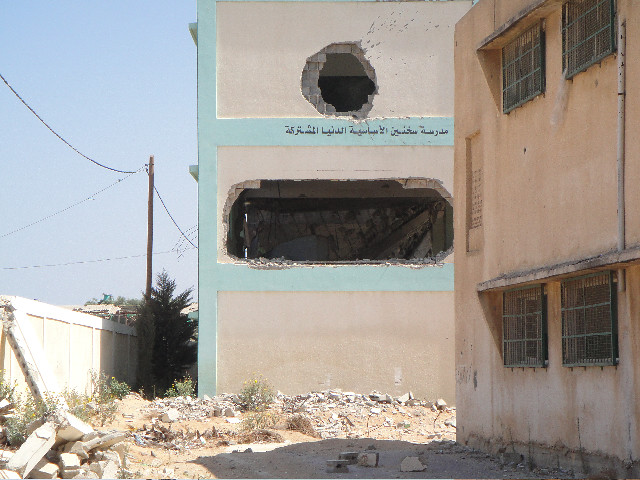
Schools may also be attacked when they are used as polling stations in elections, or because state or non-state armed groups locate bases in or near them. This has been a problem in Syria in particular, where 16 of 22 schools identified by the UN in 2017 as being used for military purposes were subsequently attacked.

The worst-hit countries over the last five years, according to the GCPEA report, are the Democratic Republic of Congo and Yemen – but the problem reaches far beyond war-torn trouble spots. The report identifies eleven “very heavily affected” countries, including India (with attacks concentrated in Jammu and Kashmir), Turkey (in relation to state anti-terror laws and conflict with the Kurdistan Workers’ Party) and the Philippines (notably affecting indigenous peoples).


Al Jazeera English
A bombed school destroyed in Gaza, Israel in 2009
Photo credit by Al Jazeera English


How do you ensure schools’ civilian status?

The report’s top recommendation is that states approve and promote the Safe Schools Declaration. Drawn up in 2015 in a process led by Norway and Argentina, it encourages parties engaged in armed conflict to respect the civilian nature of schools. The report finds positive signs that it may already be having an impact: 12 countries with reported military use of schools signed up to the declaration in 2015, and by 2018 their incidence of military school use had roughly halved.

Determining how best to protect schools, teachers and their students without further politicising them is a difficult balance. As one teacher in a private school in Kumba, Cameroon told Human Rights Watch after the attack last month, “We don’t want soldiers in the classrooms because the neutrality of schools should be preserved, but we deserve better protection.”

In 2016, a Human Rights Watch report on Afghanistan’s Baghlan province noted that the military often use schools as bases in villages where they are the only reinforced-concrete structure: “Children are being put in harm’s way by the very Afghan forces mandated to protect them”, noted the senior researcher. 

The report’s other recommendations include developing school safety plans and early warning systems in close collaboration with local communities and civil society organisations that understand local contexts.

Michaël Prazan, a former teacher, told the BBC that Samuel Paty’s murder highlighted the need for early warnings to protect teachers and students: “We need to be more responsive,” he said referring to helping vulnerable students displaying troubling behaviour. “We need to deal with it quickly before it spills over onto the internet and a death threat for the teacher."

However, teachers may struggle to do this alone. Udo Beckmann, who leads a teaching union in Germany, told Deutsche Welle that teachers in his country’s schools need more training and assistance from psychologists and social workers.

Ultimately, as French teaching unions pointed out in a joint statement on Samuel Paty, the safety of teachers depends on support from across society for them to carry out their professional vocation – preparing the next generation of citizens. 

Photo caption: A bombed school in Yemen in 2013
Credit: Julien Harneis

Blog
  • 04.11.2020

Teacher salaries rarely reflect the importance of their job. Why don’t we pay them enough?

The COVID-19 pandemic has shown us just how important teachers are. As schools have shuttered, teachers have become a lifeline for students, going to extraordinary lengths to keep their pupils learning. Their job is vital. And with class preparation, homework marking, extra-curricular activities and pastoral care all to do, on top of teaching classes, teachers' workloads can be relentless. But as a recent report from the International Institute for Educational Planning shows, teacher salaries rarely reflect the size and importance of the job. So why don’t we pay them enough?


A salary crisis

In many cases, teachers are paid less now than they were 20 years ago. According to the latest OECD ‘Education at a Glance’ report, teachers’ salaries have decreased (in real terms) in a third of countries since 2000. After the 2009 financial crisis, teachers’ average salaries were either frozen or cut across all countries, only starting to climb again after 2013. Even now, in ostensibly wealthy nations, teachers are underpaid. Take the USA, where data from 2018 show that teachers are paid 22% less than peers who have the same level of college education and a similar number of years’ experience.


Better pay, better teachers

The effects of this pay disparity are serious, and it is quickly developing into a crisis. Low salaries make it harder to attract new teachers and retain those already in the profession. When college graduates see their peers offered better salaries and a better lifestyle in other professions, it can become difficult to convince them to pursue teaching. 

It has been shown that increasing starting salaries would make teaching more appealing, increasing competition for jobs and raising the standard of applicants. As a consequence the social status of teaching as a profession would rise, boosting teacher motivation.

As for retention, it’s often the best teachers – those who work the hardest and go above-and-beyond for their students – that become disillusioned when their efforts go unrecognised. Eventually, many are driven to seek a better lifestyle in another line of work. 


Better teachers, better societies

Investing to attract better teachers yields both short and long-term benefits for students and for society as a whole. Research shows a direct correlation between teacher pay and student performance – a 10% pay increase is likely to lead to a 5-10% increase in student performance. 

What should not be overlooked are the long-term benefits of good teaching. Better-performing students are more likely to go on to further studies and earn more. They are also less likely to fall pregnant at a young age.


What needs to happen

There’s no good argument against raising teachers’ salaries. In times of financial hardship, it can be tempting for governments to see teacher salaries, the single biggest expenditure in education, as an easy target for cuts. That was the attitude in 2008, and now with the pandemic looming that temptation could return. But that would be a short-term fix to society’s long-term detriment -- and teachers won’t stand for it. Around the world, teachers have expressed their dissatisfaction with educational reforms that have shied away from raising salaries. In Ecuador and Ethiopia, reforms to teaching as a career have had little impact on the profession’s appeal, at least while low salaries determine its social status. On the other hand, the government in Thailand transformed teaching’s status as a profession by substantially increasing teacher remuneration in the 2000s. The Thai education system is reaping the benefits now, with more motivated and happy teachers that stay in the job for longer.

Likewise in Nigeria, after teachers protested their low pay and blamed it for the country’s falling education standards, changes have recently been announced to ensure teachers feel more supported and appreciated for their work. President Muhammadu Buhari introduced a raft of improvements, including a new pay-scale for teachers, a special pension, and even the promise of affordable housing for teachers in rural areas. The result is a system that should incentivise the best graduates to become teachers, and improve retention by rewarding those who stay.

The question of whether or not to pay teachers more is ultimately down to priorities. For any country concerned with the long-term health of its economy and society, the evidence is clear: an investment in teachers is one of the best investments a country can make.

Photo credit: Maria Fleischmann / World Bank

Blog
  • 27.10.2020

Children in refugee camps are ‘starving for education’ says teacher. This is how education can continue despite displacement

Even before governments across the world closed schools in response to the COVID-19 pandemic, continuing education was a major challenge for refugee or internally displaced children. During 2020’s lockdowns, children in refugee camps have been at especially high risk of missing out on remote education due to lack of access to the necessary technology.

As schools reopen around the world, more attention is needed to the particular challenges faced by teachers in refugee camps.

Ja Aung is a middle-school teacher in Hpung Lung Yang [GSA1] camp for internally displaced persons in Kachin State, Myanmar. The camp’s plywood and sheet-metal structures house around two thousand people forced from their homes by fighting between the Kachin Independence Army and Tatmadaw, the armed forces of Myanmar. Before the pandemic, she reflected on the difficulties of her role:

“The biggest challenge that I face as a teacher is communication”, says Ja Aung. “As the schools where I teach are in the border areas between China and Myanmar, students speak different Kachin dialects and accents, not just the common Kachin language, Jinghpaw.

Ja Aung is not alone – communication is one of the four main challenges pinpointed in Save the Children’s report Hear It From The Teachers: Getting Refugee Children Back To Learning. In a survey, 61% of refugee teachers employed by the charity reported issues with some children not speaking the language of instruction in the classroom.

As the report explains, studies suggest that the most effective way to integrate pupils who do not speak the majority language is to incorporate some lessons in their mother tongue, rather than immerse them in the new language. But that can be challenging when children in a class speak multiple languages.


How to teach in a crisis

Training is another challenge the report highlights: “A lack of effective teacher professional development is a key issue for teachers of refugees around the globe”.

Ja Aung concurs: “I am lucky that I received 9-month teacher training,” she says, referring to a unique pre-service teaching program, called the New Generation Teacher Training College which is a partnership between the local Diocesan Commission of Education and Jesuit Refugee Service.

Aung spent seven months studying an intensive teacher preparation curriculum and had an additional two month placement at a local school.

 “I found that the teachers who did not receive any teacher training or trained for short term such as one week faced many challenges, as they did not get a chance to learn skills for teaching such as elements of pedagogy like school and classroom management.

“It would be good if there will be ongoing teacher training program for all teachers, Ja Aung adds.

Recognising the need for teacher training, the Inter-agency Network for Education in Emergencies developed an open-source package: Training for Primary School Teachers in Crisis Contexts comprises four modules, with a participant handbook and facilitator’s guide available online.

This package underpins initiatives such as the New Generation Teacher Training College, as well as Teachers for Teachers, run by Columbia University with various partners, which offers services including peer coaching and mobile mentoring via WhatsApp and a private Facebook group.

The modules cover subjects including classroom management, child development, lesson planning, using local resources in the classroom, positive discipline, identifying signs of distress in children, and how teachers can look after their own well-being.

When asked what she would especially like to learn more about, “child psychology” is the first topic Ja Aung mentions. She already uses techniques such as building a child’s self-confidence by hanging their drawings on the wall, and scheduling “singing and dancing at the last period on every Friday… I believe this boosts their well-being.”

Ja Aung’s interest is shared by the teachers surveyed for Save The Children’s report: three-quarters of respondents drew attention to students’ psychosocial wellbeing as a priority, with some children being quiet and distant while others are hostile or hyperactive.

“Teachers regularly reported that they needed to provide refugee students with targeted support to better understand what was behind their behaviors, the report notes.


Keeping children in class

The final challenge identified by Save The Children is that many refugee children drop out of school to look after siblings or earn an income. UNHCR figures suggest that while 77% of primary-aged refugee children were in school in 2019, this dropped to just 31% at secondary level.

Refugee girls are especially at risk of dropping out because of early marriage, pregnancy, or parental concerns about mixing with boys. One estimate, based on UNHCR statistics, is that half the refugee girls who were in secondary school before COVID-19 are unlikely to return when schools reopen.

While getting vulnerable children back to school is currently a challenge across the world, these figures point to the need for more research into the particular difficulties in refugee contexts.

Photo credit: INEE

Blog
  • 14.10.2020

This teacher is using mindfulness and WhatsApp to keep girls in Bangladesh learning despite school closures

While schools in most countries have now reopened their doors after the Covid-19 hiatus, in Bangladesh the government  recently decided to extend the shutdown of educational institutions. Pupils have been out of school since March 17.

For teachers, the extended period out of school is both a challenge – to keep students engaged and learning – and an opportunity to rethink how education should be delivered.


Reimagining teaching

Sharmistha Deb is a teacher whose experience of supporting her female fourth-grade students remotely has led her to start a project developing new content on social-emotional learning.

“Research suggests that such learning can help reduce anxiety, suicide, substance abuse, depression, and impulsive behaviour in children,” says Sharmistha, “while increasing test scores, attendance, and social behaviours such as kindness, personal awareness and empathy.”

Lockdown has challenged the wellbeing of many children in Bangladesh. One assessment, conducted in May, found that over half were not taking part in online classes or watching the televised lessons aimed at families without internet access.

Asif Saleh, the executive director of BRAC – an NGO that provides a wide range of services across Bangladesh – has raised concerns about an increase in child marriages in rural areas, while urban areas are seeing more problems with youth crime and drugs.


Learning from previous crises

These reports mirror experiences in Africa during the Ebola crisis, according to UNESCO’s reportAddressing the gender dimensions of COVID-related school closures’: Ebola-related school closures “led to increases in early and forced marriages, transactional sex to cover basic needs and sexual abuse, while adolescent pregnancy increased by up to 65% in some communities”.

Sharmistha, a Fellow of the Teach for Bangladesh Fellowship programme, which aims to reduce educational disparities and build the long term leadership skills of educators, wanted the 33 girls in her class to feel connected and important while their school was closed. She uses a range of apps to keep in touch with them – Imo, Viber, WhatsApp and Facebook, as well as phone calls – and check on their mental health.

She found they were experiencing a wide range of psychological impacts due to being isolated from their friends and having to adjust to radically different daily routines, often with more responsibilities for looking after family members. Lockdown increased the financial insecurity of their households, which had already put some of the girls at risk of exploitation and child marriage.


Mental health mentoring

Sharmistha talks to the girls about five ways to boost mental health – prayer, healthy food, meditation, exercise and sleep. These conversations have deepened Sharmistha’s belief that teachers need to support students with their emotional wellbeing, help them to deal with anxiety and develop their self-confidence so they in turn can support their families and communities.

“Students may need additional psychological and socio-emotional support” because of lockdown, notes Supporting teachers in back-to-school efforts: A toolkit for school leaders, a recent publication by UNESCO, the Teacher Task Force and ILO. “A whole new set of vulnerabilities could have reared up during school closures, including disruption of vital safety nets such as school meals or exposure to other trauma in ‘at-risk’ households.”

Among the toolkit’s suggestions is “providing checklists for teachers to assess learners’ behaviour and reactions in relation to stress and anxiety”, and making sure teachers know how to report suspicions of abuse.

Building back equal: Girls back to school guide, calls forprofessional development for teachers, school management and other education sector staff to identify and support girls who are struggling psychologically.”


Getting girls back to school

There is the challenge of getting girls back to school, after months away and amid continuing fear of the pandemic. Erum Mariam, the executive director of BRAC Institute of Educational Development, says frontline workers need to “give these families psychosocial assistance and to convince parents to send their children back to school… We cannot work under the assumption that once schools open, children will return.”

After the Ebola crisis there were “increases in school drop-outs among girls when schools reopened”.

Sharmistha is already planning how to integrate social-emotional learning into her lessons, with activities on mindfulness, self-control, relationship building, anger management, coping with stress, empathy, conflict resolution and social sensitivity, and identifying the early signs of mental illness.

“We need to develop social-emotional learning strategies that actually work as proactive initiatives for preventing mental illness,” she explains.

*

This blog is part of a series of stories addressing the importance of the work of, and the challenges faced by teachers in the lead up to the 2020 World Teachers’ Day celebrations.

*

Cover photo credit: Teach For Bangladesh