Blog
  • 08.07.2020

How the COVID-19 pandemic is affecting contract teachers in sub-Saharan Africa

Based on research provided by Pierre Varly for the TTF, this note examines how COVID-19 is affecting contract teachers in the public and private sectors in several African countries and provides recommendations for improving education resilience in the face of school closures. It has been published to mark the release of the TTF Review of the use of contract teachers in sub-Saharan Africa.

The current global education crisis

The COVID-19 pandemic has had an unprecedented impact on education systems. At its height, 194 countries had implemented country-wide school closures, affecting 63 million primary and secondary teachers. Sub-Saharan Africa has not been spared during this crisis, witnessing country-wide closures affecting an estimated 6.4 million teachers.


Who are contract teachers?

Contract teachers are recruited through alternative pathways and agree to work outside traditional employment arrangements that are supported by a civil service collective agreement. They receive a salary for the work they perform but do not receive the benefits that apply under public-sector norms and standards, such as annual leave, pension or health insurance.  

While contract teachers may hold similar academic qualifications to their civil service colleagues, they are frequently trained insufficiently in pedagogy, and do not participate in continuous professional development programmes. As a result of their status, contract teachers typically receive lower remuneration and have less job stability, as their employment is subject to public budget fluctuations, market pressures and education providers’ ability to pay.

In practice, there is no single definition of a contract teacher. In francophone sub-Saharan Africa, for example, the terms part-time teacher, state contract teacher, community teacher, national service contract teacher and volunteer all refer to contract teacher subtypes. Teachers in the private sector may also be thought of as contract teachers since they are often paid directly by schools through fees collected from parents. They typically earn less than their public sector counterparts. Various public-private arrangements also exist, with varying implications for the payment of salaries.


Contract teachers as means to expand access to education

The world will need an estimated 69 million teachers, including 17 million for sub-Saharan Africa alone, to meet the fourth Sustainable Development Goal (“Ensure inclusive and equitable quality education and promote lifelong learning opportunities for all”) in 2030. Due to the teacher shortage in many government-owned schools, contract teachers have been used by the public sector to fill gaps, especially in several sub-Saharan African countries, where the school-age population has grown faster than countries’ capacity to train them. In other countries, remote and rural community-based schools have been set up, based on a public-private model, that employ teachers paid for by local communities and/or through government subsidies.


Understanding the impact of the COVID-19 pandemic on contract teachers is essential as they represent a high proportion of the teacher workforce in many countries. They represented 71% of all pre-primary to secondary level teachers in Niger in 2017, according to RESEN, while 64% of primary teachers in Chad were contracted community teachers in 2014. Contract teachers increased as a proportion of all teachers in primary education in Burkina Faso from being negligible in 2002 to 81% in 2015. In contrast, contract teachers decreased as a proportion of the workforce in Mali from 79% in 2009 to 29% in 2014 – as a result of a government decision under pressure from teacher unions to grant civil service status to more than 40,000 contract and community teachers.


Delayed payments and other impacts on public sector contract teachers

COVID-19 has had varying impacts on the employment and salaries of public sector contract teachers. Public sector contract teacher contracts in Cameroon, Niger and Zambia have not been suspended. Moreover, contract teachers have received their salary payments regularly despite school closures.

This contrasts with Togo where “volunteer” contracts are held by 27% of primary, 41% of lower secondary and 25% of  upper secondary teachers. While teachers’ contracts have not been suspended or terminated, regular salary payments have been a challenge. At the end of May 2020, the National Agency for Volunteering (ANVT) regularly paid about 900 contract teachers, but another 9,490 had not received any state support, representing about 1 in 6 teachers in Togo.

Some evidence shows that in Kenya, contract teachers also did not receive their salaries, since payments depend on school management, which was not possible during school closures. The joint UNESCO/UNICEF/World Bank survey of country responses shows that Burkina Faso and Guinea will also suspend payments to contract teachers, while Ghana and Sierra Leone will continue to pay salaries but after applying reductions. According to the secretary-general of the Teachers’ Union in Uganda, Filbert Baguma, contract teachers there, too, have not received regular salary payments.

Although their situation is not directly related to COVID-19, 2,500 new teachers hired in late 2019 in Niger have yet to receive salary payments for the first few months of 2020. Having incurred debts to travel to their postings, teachers were then obliged to leave their posts during the shutdown then return for the reopening of schools on 1 June (Education International, 2020). In Cote d’Ivoire, the Ministry of National Education, Technical Education and Vocational Training announced that payments would soon be made to 10,300 teachers recruited in 2019.

In Gambia, temporary teachers whose contracts ended in March 2020 were unable to reapply for their positions due to school closures, ending their regular income.


Private sector teacher instability

COVID-19 has revealed institutional shortcomings in the management of teachers. For the public and especially for the private sector, contract teachers may not be covered by any regulations in the event of force majeure (a circumstance beyond the control of both parties). Unlike in the public sector, however, private sector teachers receive salaries directly from school providers, making the tracking of payments much more difficult. In other cases, including community schools, a public-private model is used where local parents pay fees to the school, which can in turn be subsidized by central education authorities, to cover costs such as salaries.

Information from surveyed countries suggests many private sector teachers were not paid for April and May, mostly because shuttered schools were not able to recover all tuition fees, which constitute their only source of income. The situation varies between schools, however, depending on their capacity to offer distance or online instruction. In other cases, wages are tied directly to the work teachers do, so teachers are not paid during closures and absences. In rural community schools, implications for payments are less clear since salaries can be comprised of fees paid by parents and government subsidies, or direct payment to teachers.

According to Stéphane De Souza, the general coordinator of the provisional office of private teachers in Togo, teachers have had no salary updates from their employers (Kossi, 2020). The National Director of Catholic Education also suspended salaries of teachers for May and June. To improve matters, the Ministry of Primary and Secondary Education indicated volunteer teachers will receive government assistance throughout closures (Togolese Republic, 2020); to date, however, volunteer teachers have not received assistance. Similarly, private sector teachers have not been paid in the Democratic Republic of the Congo, Niger and Senegal, while in Kenya many teachers’ contracts have been suspended due to a general lack of resources.

To maintain partial salaries for private school teachers in Mozambique, the government has requested that private school leaders negotiate with staff and that parents continue to pay monthly fees. Some parents have not complied, making it difficult for administrators to pay full salaries to teachers. As a result, some schools have negotiated with teachers to lower salaries to 75% during the first month and 50% during the second. Similar reports from Zambia show that many private sector teachers there are currently receiving 50% of their monthly salaries.

Finally, it is important to note that since a significant portion of the early childhood care and pre-primary education sector is private, the implications for pre-primary teachers’ salaries not being paid will be greater than in primary education. Additionally, since 80% of pre-primary teachers in sub-Saharan Africa were female in 2017, the non-payment of salaries at this level primarily affects women.


Towards a more effective response for covering salary costs and building system resiliency

As the main system input to achieving education quality, teachers need to be sufficiently trained and supported. The non-payment of teacher salaries therefore not only poses a significant problem for individual, family and community well-being, but also prevents the delivery of quality education and the achievement of SDG4. The effects on teachers of school closures, including attrition and the hardship experienced by those returning, could seriously harm teaching and learning, and undermines the education system’s ability to withstand shocks, including possible resurgences of COVID-19 when schools reopen.

The non-payment of salaries also places a psychological burden on teachers. The General Coordinator of the Provisional Office of Private Teachers in Togo uttered a cry of despair: “We have nothing left to provide for our families. The situation is serious.” (Kossi, 2020).

Government can show leadership by mitigating some of the most severe impacts. Senegal, for example, set up a contingency fund called Force COVID-19. This response fund of 1,000 billion FCFA (USD 1.6 billion) is intended to support businesses and households through a social and economic resilience programme (PRSE) that guarantees wages, including those of both civil servants and contract staff working in public institutions, until classes reopen.

For the private sector, governments can influence private providers in the regular payment of salaries. Education authorities in Cote d’Ivoire have used traditional and social media networks to communicate the importance of paying private sector salaries. The minister of education even warned the private sector against teacher layoffs and non-payment of salaries while congratulating those that continued to meet payments. The minister went further to stress that the payment of salaries by private providers will be a precondition to the transfer of funds to private sector establishments.

Civil society teacher representatives can also continue to play an important role. This includes both public sector teacher unions and those representing the interests and rights of private sector teachers. Due to non-payment to private sector teachers in Togo, a new teacher union was quickly set up, the National Union of Private Schools and Institutions of Togo (SYNEP-TOGO), which held its constituent general assembly in April 2020. Formed to defend private teachers’ rights and socio-economic interests, SYNEP-TOGO aims to ensure better representation of its membership to public authorities and international organizations to allow for collective bargaining for the private sector (Togo top news, 2020).


Recommendations for maintaining teachers’ contracts and payment of salaries

Member states are reminded of the 1966 ILO/UNESCO Recommendation concerning the Status of Teachers and articles about teachers’ salaries, and rights and responsibilities. The Teacher Task Force further proposes the following recommendations to ensure teacher salaries are covered now and during future school closures.


Enhance the provision of distance education: The spread of distance education is vital for the continuation of teaching and learning during school closures; however, it is also vital to maintain teacher contracts. Where schools close and teaching and learning cannot be transferred online or through other distance education methodologies (including via mobile phones, broadcast and Interactive radio and television and printed materials), contract teachers will be vulnerable. A partial solution is to develop strategies that help schools and teachers to continue teaching during school closures, including the use of high-, low-, and no-tech solutions. For this, teachers need to receive adequate training and preparation, with special provisions for contract teachers who are excluded from professional development opportunities. They also need access to the Internet and the necessary devices.


Develop financing strategies to cover teacher salaries: The Global Partnership for Education (GPE) has announced an additional USD 500 million to support education systems affected by COVID-19 school closures. Governments therefore may have additional leverage to pledge special funding of up to about 4% of total education expenditures to ensure that all teacher salaries – public and private – are paid during short periods of crises. Governments can also make subsidies to private schools conditional on the payment of teachers’ salaries. Countries should also consider innovative funding mechanisms to support teachers during the crisis and the international community should be able to support these efforts.


Strengthen teachers’ voices through teacher unions and civil society representation: Public and private sector teachers – including teachers and support staff in early childhood care and pre-primary education – need better representation. At the same time, relationships between teachers’ unions need to be strengthened to enhance sharing of information related to COVID-19, its impact and effective ways to maintain learning, including distance learning techniques. The collective representation of education support staff and early childhood care and pre-primary education staff needs to be enhanced to improve their standing.


Improve communication with parents, caregivers and communities: Governments can communicate better with parents and caregivers about school closures and their impact on education, as well as with communities about the importance of paying school fees on time, despite the interruption in education, to ensure teachers do not lose their livelihoods.


Improve data on non-civil servant teachers: It is important to collect regular data on contract teachers, including their salaries, training, qualifications and conditions of employment, to enable more effective policy and planning responses when needed.


**********************************************************


Teacher Task Force presents new research on the impact of COVID-19 on contract teachers

To shed light on the impacts of the COVID-19 crisis on contract teachers in sub-Saharan Africa, the Teacher Task Force conducted desk research and numerous interviews with representatives of ministries, trade union and UNESCO National Commissions. The research is supplemented by data collected through the joint UNESCO/UNICEF/World Bank “Survey on National Education Responses to COVID-19 School Closures.” The Teacher Task Force is also publishing the “Review on the use of contract teachers in sub-Saharan Africa”, which takes a closer look at the situation of contract teachers in 23 countries in sub-Saharan Africa.

The Teacher Task Force, in its response to the COVID-19 crisis, issued a Call for Action on Teachers to ensure all teachers are protected, supported and recognised. In it, the Teacher Task Force calls on governments, education providers and funders – public and private – and all relevant partners to preserve employment and wages, stressing that governments and all public and private education providers should work to preserve the entire teaching and education support staff, and their salaries and benefits. They will be essential for a rapid and effective recovery when schools re-open.

Blog's photo credits: Dietmar Temps / Shutterstock.com

Report
  • pdf
  • 17.06.2020

Teachers in Asia Pacific: status and rights

In 2006, a regional seminar was held in Bangkok that focused on examining the status of teachers in the Asia-Pacific region. Subsequently, in 2014, UNESCO Bangkok proposed a study to review the...
News
  • 17.06.2020

Supporting teachers in back-to-school efforts: A toolkit for school leaders

The reopening of schools that had been closed because of COVID-19 is raising many questions for school leaders. They need to put the school community’s safety and health first. At the same time, they have to ensure that schools’ front-line workers – teachers and education support staff – have the help, protection and tools they need to resume work.  Teachers have played a key role during school closures by ensuring that learning can continue and by keeping in touch with students and their families. Their role during school reopening will be just as important.

UNESCO, the Teacher Task Force and the International Labour Organization have released a toolkit to help school leaders support and protect teachers and education support staff in the return to school. The toolkit complements the joint Framework for Reopening Schools and the Task Force's policy guidance released last month. It breaks down the seven dimensions identified in the policy guidance into a series of actionable guiding questions and tips.

As schools reopen, we are learning more and more about the challenges and opportunities faced by school leaders and the whole school community. In the coming months, we look forward to hearing from those on the front line and sharing these stories and lessons learnt with you.


Figure 1. Seven dimensions to support teachers and staff as schools reopen
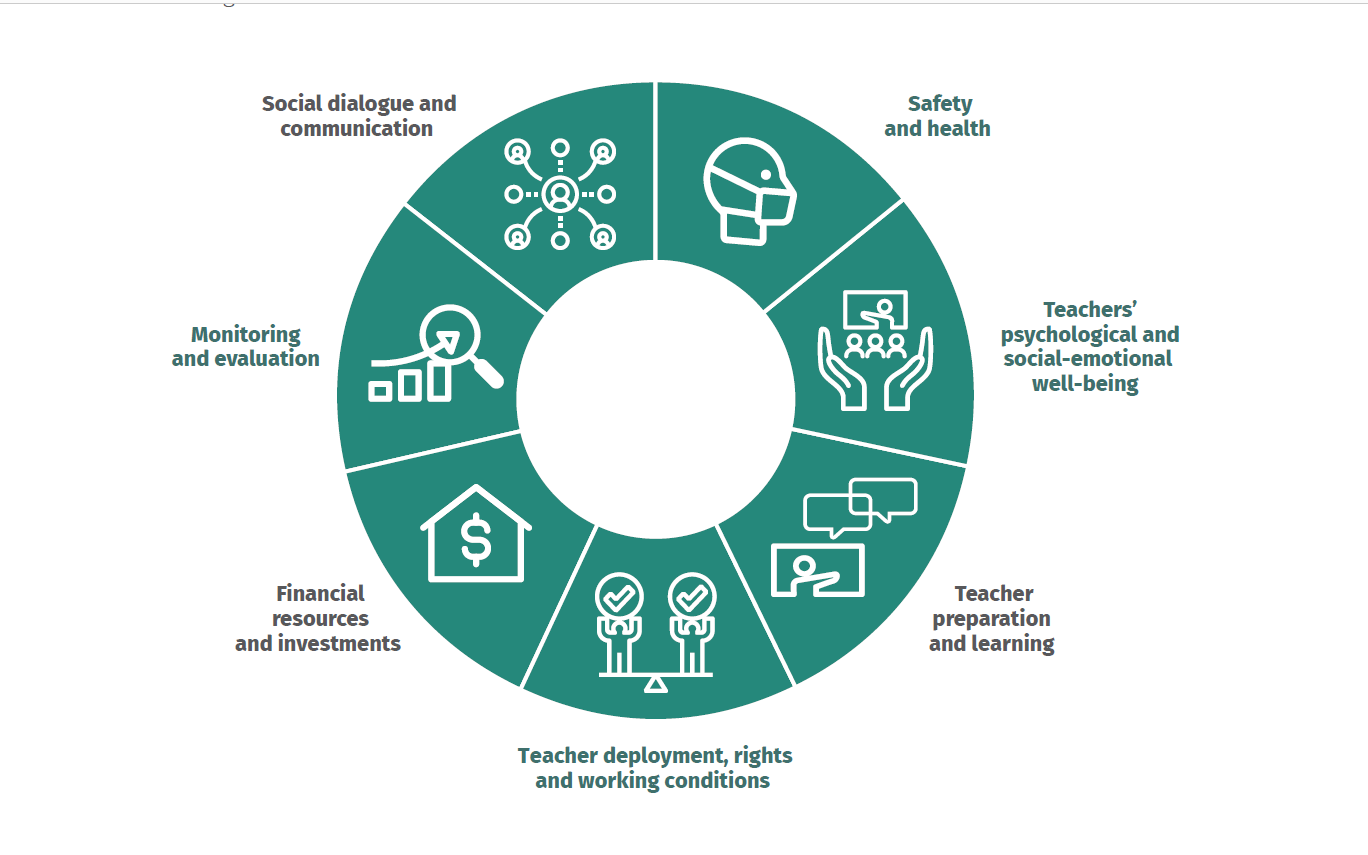
Figure 1. Seven dimensions to support teachers and staff as schools reopen

The toolkit recognizes the importance of local context. In many countries the pandemic is evolving daily. Local decisions about when to reopen schools will be determined by a broad range of considerations; what is right for one school may not be right for another. In all contexts, school leaders will need to set priorities and recognize that trade-offs may be needed. To facilitate physical distancing, for example, schools may have to reduce the number of teachers and students on site by reopening selectively and staggering the return by grade and/or level. They may also have to privilege certain population segments or learner groups, such as vulnerable and at-risk learners and the children of essential workers. In some cases, closing schools again may have to be considered. Alternatively, available resources may be reallocated to ensure the readiness of school buildings and safety equipment, or to better prepare teachers and education support staff.

The toolkit shows us that school leaders will need to think about key issues in relation to teachers and education support staff as they adapt national directives to plan to reopen their schools.


  • The importance of consultation and communication

Teachers, school staff and their representative organizations should be actively involved in setting out policies and plans for school reopening, including occupational safety and health measures to protect personnel. Communication with teachers, learners and education support staff about reopening can ensure clarity about expectations and highlight their role in the success of safe, inclusive return-to-school efforts, including overall well-being, and the teaching and learning recovery process.

As decisions to reopen schools are made by central authorities, it will be important to communicate early, clearly and regularly with parents and school communities to understand their concerns and build support for plans to reopen. Parents will want to know what safeguards have been put in place to minimize health risks. They will also need to hear about the school’s ongoing commitment to key educational principles and goals. As teachers are often the first point of contact with parents, they will need to be prepared to ensure everyone is informed continually.


  • Reassuring teachers and school staff about their health, safety and rights

Concern for the well-being of teachers, support staff and students is at the heart of decision-making. It is important to balance the desire to return to school with consideration of the risks to (and needs of) teachers, support staff and learners, so that the needs of the most vulnerable members of the school community are met.

School-level responses may include ongoing psychological and socio-emotional assessment, and support for teachers and learners. School leaders and teachers should be free to address their own needs, exercise self-care and manage their own stress. School leaders can help teachers develop stress management skills and coping mechanisms, so they can teach effectively and provide much-needed psychosocial support to learners. It is also critical to understand that schools are a workplace and that it is more vital than ever to respect the rights and conditions of the people who work there.

 “Before schools reopened, the teachers were worried about resuming work and contracting the virus, as were the parents. We had no WASH facilities, no masks and large classes. Discussions with health staff would have helped us a lot. It would also have been reassuring to have psychologists in schools for psychosocial care. In the end, we were able to obtain sufficient sanitation and masks from an international NGO, and only one grade returned to school to prepare for exams. The classes were split in two", stated a Primary school principal from Ouagadougou, Burkina Faso


  • Using teachers’ expertise in the new classroom environment

In most contexts, when children return to classrooms it will not be business as usual. In some cases, only some students will be present, or there will be double shifts. Lesson plans, assessment and overall curricula will be adapted, and remedial lessons will need to be developed and deployed.

School leaders need to ensure teachers are empowered to make decisions about teaching and learning. They can work with teachers to adjust curricula and assessment based on revised school calendars and instructions from central authorities. School leaders should also support teachers to reorganize classrooms to allow for accelerated learning and remedial responses, while adhering to regulations on physical distancing.

Teachers’ key role in recognizing learning gaps and formulating pedagogical responses remains critical. This is especially true for vulnerable groups, including low-income families, girls, those with special needs or disabilities, ethnic or cultural minorities and those living in remote rural areas with no access to distance education.

To manage the return to school, it is important for teachers and education support staff to receive adequate professional preparation to assume their responsibilities and meet expectations. Training, peer-to-peer learning and collaboration with other teachers, both within the school and more broadly, will be critical. Such support is particularly important where additional strain may be placed on teachers’ time if they are required to conduct both face-to-face and distance education.

This is the first edition of the toolkit for school leaders to support teachers and other education personnel in back-to-school efforts during the COVID-19 pandemic. This toolkit has been drafted as a living document. It will be updated in late July 2020 with new information and lessons learned as the crisis and response continue to evolve.

Download the Toolkit

Blog
  • 04.06.2020

No electricity, no Internet, no online learning: Lara’s story

Shanghai, January 2020

I woke up one morning in the Chinese New Year holidays to find we were not going to return to school on February 3 as expected. Instead, we were told to prepare to teach online. As the pandemic spreads all over the world education has to reinvent itself rapidly. Teachers from all over the world have come together on social media to support each other and share experiences during these difficult times. But as I become more conversant with online teaching, my mind is still not at ease. I am one of the privileged ones lucky enough to have access to a huge number of resources. But how about those who are not so lucky? My thoughts were with the people in my home country, Mozambique, and other developing countries where the vast majority of the population has no access to electricity, let alone online learning.


Lara, a 13-year-old eighth grader, starts her day by helping the family with chores around the shack where they live instead of heading to school as she used to do before the terrifying pandemic. Lara and her family live in Manhiça, in the province of Maputo, Mozambique. She attends the Filipe Nyussi School in Maluana. Neither of Lara’s parents has completed primary education. Her father is the sole income provider and he earns about $45 per month, which he needs to manage carefully between food for the family and education for Lara and her seven brothers and sisters.

Despite the difficulties, Lara’s father says his dream is to see his daughter complete her education. He beams with pride as he describes Lara as a smart, passionate, and dedicated student. Sadly, he also expresses a lot of concern about the uncertain future.

Due to the pandemic, schools in Mozambique have closed. Lara’s daily routine has changed dramatically. She must stay at home while her father walks to school to collect school assignments. When he gets home after work, Lara completes the assignments and later submits them for the teachers to review and grade. Occasionally, her father has had to pick up assignments twice, paying up to 160 meticais (about USD 2.40).

Lara is very eager to learn. She is frustrated that while she would spend four  hours a day learning when she could go to school, her current routine only allows her to study for one hour a day. The family agrees that the current level of education is extremely weak, but unfortunately there is little they can do. They complain about the additional costs for the printed material.

Lara and her family have no access to electricity and consequently have no TV or Internet access at home. This type of situation is very common throughout the country. For this reason, schools have resorted to providing written material prepared by the teachers for students to study at home. Many other children in rural areas, especially girls, face similar challenges. While school is meant to be free, many have complained about the fees for the printed material. In addition, not going to school exposes young girls like Lara to hidden risks of premature marriages and/or pregnancies.

Private schools in urban areas are investing in online schooling for their pupils. However, the level of investment is not standardized and not consistent among schools. Some private schools are moving faster with online platforms and online classes to better meet the needs of their students. Nevertheless, they also rely on parents’ willingness or financial ability to invest in access to technology such as Internet connectivity, computers, and mobile devices.

Studies have shown that the quality of education in Mozambique lags behind that of its neighboring countries and the level of school retention for young girls in the country is still a challenge. On top of that, the country also struggles to provide proper training for its teachers.

Online education is not a feasible option in a country where most people have no access to the Internet. While teachers from all over the world get together in social media to collaborate and give education a face-lift, some teachers and schools in less privileged countries are forgotten.

Nadya Faquir

**********************************************************

This piece is part of the Teacher Task Force’s #TeachersVoices campaign, created to bring forward the experiences of teachers working every day to ensure their students continue to benefit from a quality education despite the COVID-19 pandemic. To participate, go to our dedicated webpage.

Blog
  • 02.06.2020

Using technology to teach the remote classroom due to Covid-19

In Brazil, where I teach primary and secondary school, 82% of students are in public schools. Due to regional social differences, some of us have to deal with adverse situations. But all regions face related problems and connect in different ways.

I work in a community of extreme poverty, with few resources. Together with teacher colleagues, I have mapped out the best way to work with these students, in view of their social and economic reality. Infrastructure and connectivity resources are lacking, but most families have mobile devices, such as cell phones.

We conducted and made available a study guide to be carried out at home with printed curricular guidelines so that parents could withdraw their children from school at alternate times, so as not to create agglomerations that would pose a danger due to Covid-19. The guidelines included information about the platforms that would be used, such as WhatsApp and social networks, including a Facebook group that we already had for all the classes in the school.

So, in addition to the printed guidelines sent to homes, I started using WhatsApp and Facebook with my classes to disseminate short videos. The videos give them guidance to carry out activities, such as work on various topics from digital literacy to computational thinking and problem-solving skills, but also socio-emotional skills, such as creativity, self-management and self-care.

I proposed to the students some reflections and suggestions for hands-on activities. For example, we made a mechanical hand. I made a sequence of short videos, talking about creativity, telling the story of Leonardo da Vinci and also of sustainability , and the three Rs (recycle, reduce and reuse). Another video talked about the importance of the mechanical hand for industry, saving lives and giving quality of life to people who have lost limbs. Finally, I encouraged them to create a robotic hand using cardboard, string and glue, with a hashtag to post a photo on the Facebook group when the work was done.

WhatsApp also works as a channel to clear up doubts, so I organized daily schedules for my students to let them know when I am available to remedy difficulties and clarify points. This has been effective in helping students to continue their studies.

In addition to my work as a teacher, I write two columns on education in major media. I have used this moment to write to teachers and educational managers about using technology to teach, pointing out information about tools such as Google Classroom, Zoom, Blackboard, Century Tech, and EkStep, among others. I have also written about planning, about designing and applying activities, about assessment and hybrid teaching. I have also provided guidance for class recordings, on topics such as voice intonation, didactic sequence, time, cell phone handling, sound and light, as the vast majority have prepared classes without interactions, only with forums.

I help parents and family with tips and suggestions on how to organize the home study routine (offering practical examples) and how to increase the repertoire of activities. I show them the importance of creating lists of books, films and virtual places, such as museums. I also offer guidance on how to help students to understand whether they have managed to reach all the learning objectives, with such questions as:

  • Does the exercise that I got wrong have to do with the content of the previous learning?
  • Was there any factor that took my attention away from studies?
  • Did I understand the question?
  • Did I answer what was asked?
  • Did I study the whole topic?

This is a period of new learning for all, in which it is necessary to learn from each other, to listen and find ways to overcome difficulties.


Débora Garofalo is a technology teacher in the public education network and a technology manager at the São Paulo State Education Secretariat. She is an education columnist, a winner of national awards and was in the top 10 of the Varkey Foundation's Global Teacher Prize 2019.

**********************************************************

This piece is part of the Teacher Task Force’s #TeachersVoices campaign, created to bring forward the experiences of teachers working every day to ensure their students continue to benefit from a quality education despite the COVID-19 pandemic. To participate, go to our dedicated webpage.

Blog
  • 25.05.2020

Near or Far as a TEAM: Together Everyone Achieves More

TEAM is central to my philsophy of teaching and learning. Through 18 years of teaching, I have found TEAM supports learners develop a sense of belonging to their learning community, which is essential for their social, emotional, and cognitive flourishing.

During the COVID-19 crisis maintaining TEAM has been an essential aspect of ensuring ongoing education provision.

TEAM at a Distance

Professional Community Connection

With the onset of the COVID-19 crisis school staff were quick to mobilize. It was an ‘all hands on deck’ approach to support the transition to distance learning. In the first instance, all children were issued Chrome books to take home for the duration of the crisis, and staff development sessions enabled teachers to make the transition to online learning using Google Classroom. These sessions began in a face-to-face environment and transitioned to online as the ‘Stay at Home’ orders were issued. The strength of our professional community emerged in these early days, as colleagues supported one another making the transition, learning new instructional tools, and discussing how to support learning at a distance. From the Suite of Google Apps, teachers adopted Google Classroom, Google Meet, and JamBoard. Within Google Classroom, Google forms are used for quizzes; videos and interactive online activities from Educational support sites like EdPuzzle, Legends of Learning, ABCYa, and YouTube support learners engage with content.

Weekly Google Meet staff meetings have been an asset – promoting teacher and staff well-being, through opportunity to de-stress, share worries and successes, get Education updates, and to reboot for the week to come. These have highlighted for me, the importance of maintaining a strong professional community connection in order to ensure continued teaching and learning.

Professional development (PD) has been available in-school and at district level. Our school Director of Technology and Media, and the district level Technology Integration Specialist have provided 1:1 and small group instructional support on various technologies via ZOOM and Google MEET. I have benefitted directly, learning how to use Flipgrid, Screencastify, and Google Slides to integrate stop animation into my programming.

A strength of this PD support has been the openness to individual interests. My interest in establishing a District-wide Professional Learning Community Forum has been readily embraced by the District Tech., who acted immediately, setting it up for elementary teachers. Teachers can access the space to support one another through professional discussion and shared practice-related experiences.


Building Community through Parental Connection

I have used technology to develop TEAM-like connections with parents. A key part of TEAM has been working with parents to help them become comfortable and connected with the new learning environment. ‘Google Class tours’ using Google Meet, regular emails, and timely Google Meet drop-in sessions allow parents to connect with me to provide feedback, ask questions, and to troubleshoot dilemmas. Parents have become ‘class members’ to Google Classroom and ClassDojo, where they can track their children’s activity and see a portfolio of  their children’s work. Strong parent-teacher-child partnerships have been a tremendous asset to the success of online learning.


Nothing Like Routine: Keeping Students Connected

Developing an online TEAM with the children has been essential to ensure their ongoing learning. Routine has been an important element. Children use Google Classroom to access their daily schedule, and lesson activities. We meet every morning for our Morning Meeting, which involves many of the same routines that defined our first 30 minutes of ‘normal’ in-class activity.  Adding to this, ClassDojo has been an invaluable resource to maintain a focus on working together. I can take attendance, share videos that support Social Emotional Learning topics; use positive incentives; and create student portfolios. All of these features mirror routines the children had in the classroom, which has supported maintaining their class-connectedness.

As a school, we have developed a Daily News programme, written and hosted by our P.E. teacher. This program continues the routines that defined the beginning of our in-school, school day including birthday announcements, certificate awards, prayers and Pledge lead by 6th Graders via video recording.  The Daily News hosts photos that children send in, showcasing activities they have participated in and work that they have completed. It is a valuable sharing time that consolidates our connectedness as a community.


A Different Way to Teach

This crisis has certainly challenged my creativity, innovation, and flexible approaches to practice. It has underscored the importance of continued professional learning. Adopting a distance learning approach with children has demanded complex thinking – trying to ensure the social, emotional aspects are included; trying to be sure the children are connected as learners; and trying to introduce new concepts with tools that don’t always support practices essential for children’s learning, takes resilience, constant reflection, and a willingness to ‘have another go’!


Wendee White

5Th Grade Elementary School Teacher, Syracuse, NY, USA

************************

This piece is part of the Teacher Task Force’s #TeachersVoices campaign, created to bring forward the experiences of teachers working every day to ensure their students continue to benefit from a quality education despite the COVID-19 pandemic. To participate, go to our dedicated webpage.

Blog
  • 20.05.2020

Teaching – the new blended way

As a head teacher, I have always felt that teaching means not only getting the curricular content right and imparting that knowledge. It also means encouraging children to think for themselves by making them mindful of their lives and giving them the skills they need to go about various things. I have always felt that the usual school processes should not be so rigid. Until children spend some extra time sitting idle, how will they realize the power of discipline and commitment?

The Covid-19 lockdown measures have really helped me find the answer to a question that has been nudging me for a long time: “Is it really necessary that learning and teaching should be confined to the four walls of the classroom? The new answer in this situation comes out to be “Absolutely not”. Technology has really made this big globe local to us. Physical presence hardly matters. What really matters is the right tools and the pertinent approach to use them.

 In 2008 I read that there is a lot of work going on to make things e-accessible and that the future will bring user-friendly and self-teaching devices. I didn’t realize this until this lockdown that that world has arrived. Within a few days I had learnt to use and operate Zoom, Jitsy, Microsoft Team, Google Hangouts and many other platforms. The e-world has become the new reality!

Within a week I was teaching my students through an app. I received formal training from agencies but I learned most things by testing and trying. At first it wasn’t an easy to survive on e-mode (electronic/virtual/online mode) but after a few days I could see that technology does work most of the time, despite occasional disturbances, virtual distractions and audio-video problems. Initially I thought teaching through this new delivery mode was one-way communication but soon I realized that the sessions can be made lively by adding polls, surveys and videos sandwiched in between the sessions. The technology stunned me because in rural schools we just cannot afford to build in so much variety.

In the first few days, it was more a kind of game and the attendance of the students was also high but soon I realized that attendance was dropping and the joy of a new game was over. The reasons could be many: maybe a network problem, maybe the voice wasn’t audible for the students, maybe they were so busy helping the fathers harvest and mothers to cook, maybe my screen wasn’t visible or – the worst one! –  perhaps my class wasn’t interesting. When I checked the chat box, however, suddenly the conversations became two-way – the children had been on mute. They started to share their problems in the chat box.

As for myself, I was feeling distracted due to various noises but soon I realized that I needed to stop multitasking and be mindful and convey the same to my students. I finally taught them a HOTS (high order thinking skill) of mindfulness.

Whenever you feel that response is weak and attendance is poor, students are just a phone call away. Good communication and effectively convincing students why they need to study comes handy. And my country, India, has a family-oriented culture so it is always easy to make calls to parents and get the folks back to classes.

However, bad networks, high charges for data and high costs for devices are a real challenge. These could be removed by providing a free, subsidized network. Village and city libraries could be converted into virtual rooms with laptops, tablets and internet connections. If learning is free, anybody has the power to become anything.

Dr Neeru Arora

************************

This piece is part of the Teacher Task Force’s #TeachersVoices campaign, created to bring forward the experiences of teachers working every day to ensure their students continue to benefit from a quality education despite the COVID-19 pandemic. To participate, go to our dedicated webpage.